How Many Lights for a Christmas Tree? Sizing by Height
Plan on about 100 mini lights per foot of tree height for a classic look. Go toward 150 to 200 per foot for a bright, full tree. A 7.5-foot tree usually lands between 800 and 1,000 lights, and a slim tree needs about a quarter to a third fewer.
As an Amazon Associate we earn from qualifying purchases. Buttons open Amazon search results, so check the reviews, size and price before you buy. We haven't tested these products ourselves.
Quick picks
Want it by Christmas? Amazon hasn't posted its 2026 holiday cutoffs yet. Estimates put free standard shipping around December 11 to 14 and Prime around December 18 to 21. Items shipped by other sellers can take longer, so check the delivery date at checkout before you buy.
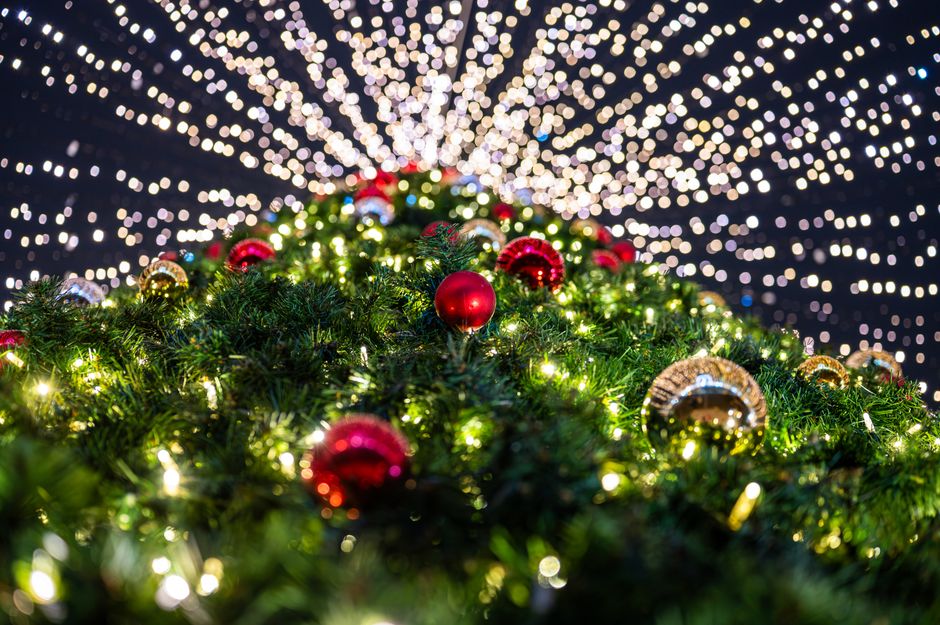
Photo by Septimiu Lupea on Pexels
What decides the number
Three things decide the count: tree height, how full the branches are, and how bright you want the result. Height sets the baseline. Fullness and brightness move you up or down from it.
One retail guide gives a starting point of 100 lights per vertical foot of tree height for a conservative, tasteful display. It suggests going closer to 200 per foot if you want the tree to be the focal point of the room. That rule applies to the body of the tree, not the full height including the star or topper. Measure from the base of the branches to where the topper starts.
These numbers are retailer rules of thumb, not a standard, and we have not tested the products mentioned here. Treat the charts as a starting estimate and adjust as you wrap.
Light count by tree height
Retailers publish similar charts. One of them lists 700 to 900 mini LEDs as standard for a 7-foot tree, and 800 to 1,000 for a 7.5-foot tree. The table below blends the common ranges for mini lights. It is an estimate for planning.
| Tree height | Soft glow | Classic | Full and bright |
|---|---|---|---|
| 4 ft | 150 to 250 | 300 to 400 | 500 to 600 |
| 6 ft | 300 to 400 | 600 to 800 | 900 to 1,200 |
| 7.5 ft | 500 to 600 | 800 to 1,000 | 1,200 to 1,800 |
| 9 ft | 600 to 800 | 1,000 to 1,500 | 1,500 to 2,200 |
The soft, standard and full columns come from a published chart for 4, 6, 7.5 and 8 to 9 foot trees. Another guide puts a classic 9-foot tree at 1,200 to 1,500 lights. The two sources overlap, so a number in the shared range is a safe pick.
Not every source agrees. A UK retailer advises about 100 LED lights per 2 feet of height, which is half the US-style rule. Those counts suit a sparse look. Most US homeowners with full pre-lit style trees will prefer the 100 per foot baseline.
Worked example: a 7.5-foot tree
Say the branches run 7.5 feet and the topper adds a foot on top. Use 7.5 feet, not 8.5.
- Classic look: 7.5 ft x 100 lights = 750 lights. Round up to 800, which matches the 800 to 1,000 range in the chart.
- Fuller look: 7.5 ft x 150 lights = 1,125 lights.
- Convert to strings: with 100-light strings, 800 lights is 8 strings and 1,125 lights is 12 strings (11.25 rounded up).
- Convert to length if you buy by feet: about 100 mini lights per foot of tree works out to roughly 33 feet of string per foot of tree when bulbs sit about 4 inches apart. That puts the classic count at roughly 250 feet of string.
Always buy one string more than the math says. A spare covers a dead section and lets you fix thin spots.
Adjust for the shape of the tree
- Slim or pencil trees: reduce the count by 25 to 30 percent. A slim 7.5-foot tree would then need about 550 to 600 lights at the classic baseline.
- Full, bushy trees: use the upper range, closer to 200 per foot, when branches are deep.
- Dark or flocked branches: flocking reflects light and may need fewer. Dark green with heavy ornaments may need more. This is a judgment call, not a sourced rule.
Even spacing matters more than the final number. The goal is even light distribution, so adjust to actual branch density, not just height.
Choosing the lights
Bulb size changes how many you need. Small 5mm style LEDs let you use higher counts without a heavy look. Larger C6 or C7 bulbs read brighter, so use fewer of them. Check these features before you buy:
- Light count and string length on the box. Spacing varies, so compare length, not just bulb count.
- LED or incandescent. LEDs draw less power and run cooler, which allows longer connected runs.
- Safety listing. ESFI advises buying electrical decorations that are approved by a nationally recognized testing lab such as UL, Intertek or CSA.
- Indoor or outdoor rating. Use outdoor-rated sets outside.
- Wire color. Green wire hides in a real or green artificial tree. White wire suits white trees.
Shop green-wire LED mini lights
Shop warm white tree light strings
See indoor and outdoor rated multicolor strings
How many strings can you connect
Count affects safety as well as looks. ESFI says never connect more than three strings of incandescent lights together. LEDs differ. Connect only the number allowed on the label for that exact model, since there is no universal LED number.
The label also wins over any calculator. If the product label says maximum 20 sets, the usable maximum is 20, not 25. Our 12-string example above is fine on most LED sets, but check each box. Do not mix brands or types in one chain unless the labels allow it.
Common mistakes
- Counting the topper height. It inflates the estimate by a foot or more.
- Buying one big set. Several shorter strings are easier to wrap and a single failure does not darken the whole tree.
- Skipping the test. Inspect all lights, decorations and extension cords for damage before using. Plug in each string on the floor first.
- Wrapping only the outer tips. Weave some lights toward the trunk for depth, then finish with the outer layer.
- Leaving the tree lit unattended. ESFI advises turning off indoor and outdoor electrical decorations before leaving home or going to sleep. A plug-in timer handles this.
- Letting a real tree dry out. Water your tree daily, and keep decorations at least 3 feet from heating equipment or open flame.
Shop outdoor-rated extension cords
Wrapping method that avoids gaps
- Fluff the branches and plug the first string in to test it.
- Start at the bottom near the outlet and work up in sections, not in one continuous spiral.
- Push lights in toward the trunk, then back out along each branch.
- Step back and squint. Dark patches show up when your eyes are unfocused.
- Add one extra string to fill the gaps instead of rewrapping.
Dark tree sections are easier to fix before ornaments go on. A tree light hanging aid, such as a pole or clip set, saves effort on tall trees.
Budget comparison
Cost depends on bulb type and count, so use these as general comparisons, not quotes. LED sets cost more up front than incandescent but use less power. Larger C-style bulbs cost more per foot of tree than mini lights. Adding a timer or tester is a small cost next to the lights. Buy the full amount at once, because dye lots and color temperature can vary between batches.
Common questions
How many lights do I need for a 7-foot Christmas tree?
About 700 to 900 mini LEDs for a classic look, according to one retailer chart. Go toward 1,000 or more if you want a fuller glow, and drop to about 400 to 500 for a soft glow.
How many strings of Christmas lights can I plug together?
ESFI says never connect more than three strings of incandescent lights. For LEDs, follow the maximum printed on the label of that exact model, since there is no universal number.
Do I count the topper when measuring tree height?
No. The per-foot rule applies to the body of the tree, so measure the branched section and leave out the star or topper.
How many lights do I need for a slim tree?
Reduce the standard count by about 25 to 30 percent. A slim 7-foot tree at 100 lights per foot would need roughly 500 lights instead of 700.
Sources
- Electrical Safety Foundation International (ESFI)
- Craft Warehouse
- Edishine
- The Christmas Light Emporium
More guides
- Christmas Tree Ornaments: How Many You Need and Which Kind
- Black Friday Christmas Tree Deals: What to Check Before You Buy
- Christmas Tree Skirt: What Size Fits Your Tree
- Christmas Tree Stand for a Real Tree: Size and Water Guide