Christmas Tree Skirt: What Size Fits Your Tree
Size a tree skirt to the width of your tree's lowest branches, not its height. Measure the spread at the floor, add about 4 to 6 inches, and round up to the next common size such as 48, 50, 54, or 60 inches. For many 6.5 to 7.5 foot trees, a 48 inch skirt is a common choice, and fuller trees need more.
As an Amazon Associate we earn from qualifying purchases. Buttons open Amazon search results, so check the reviews, size and price before you buy. We haven't tested these products ourselves.
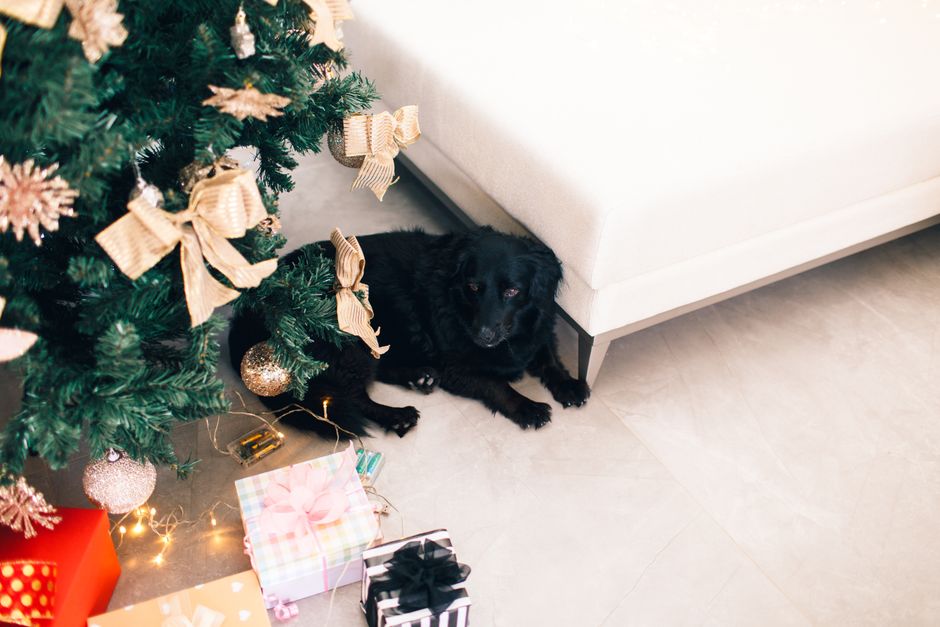
Photo by Helena Lopes on Pexels
What decides skirt size is the width of the tree at the floor, not how tall it is. Two 7 foot trees can have very different bases, and even their stands can differ by several inches. Measure first, then shop by diameter. Skirts are described by diameter, which is the width from edge to edge through the center of the circle.
The quick sizing rule
Measure the spread of the lowest branches at the floor. Interior designers often suggest a skirt that reaches 4 to 6 inches beyond the lowest branch tips, so the fabric lies flat instead of climbing up the branches. Then round up to the next common retail size, which is usually 48, 50, 54, or 60 inches.
Another rule of thumb is to buy a skirt that extends just a little past the tips of the lowest branches. Both rules give the same result in practice: the skirt should be slightly wider than the tree.
How to measure, step by step
- Set up the tree fully and fluff the branches. An unfluffed artificial tree measures narrower than it will look once finished.
- Measure straight across the widest part of the bottom branches at floor level. This is the base diameter.
- If you can only wrap a tape around the tree, divide the circumference by 3.14 to get the diameter.
- Add 4 to 6 inches for the lowest branch overhang.
- Round up to the next common size.
- Check the floor space. The full skirt diameter should fit without touching furniture, walls, or walkways.
For artificial trees, the box often lists a base diameter. Use that number rather than the room height, because branch compression changes the real spread.
Skirt size by tree height
Height gives a starting point only. The ranges below come from retailer and buying-guide sources, and they disagree a little, which is a good reason to measure your own tree.
| Tree type or height | Typical skirt diameter | Notes |
|---|---|---|
| Mini and tabletop trees | About 24 inches or less | Tabletop trees 2 to 3 feet tall are sometimes given about 20 inches |
| 4 to 5.5 feet | 28 to 36 inches | Another guide suggests 36 to 44 inches for trees under 5 feet, so check the branch spread |
| 6.5 to 7.5 feet | About 48 inches | A common choice, not a standard size |
| 7 feet, full tree | 54 to 60 inches | One guide puts the base of a 7 foot tree at 42 to 48 inches |
| Very tall or very full | 60 to 72 inches | Large skirts suit wide bases and open floor space |
Worked example: a full 7.5 foot tree
Say you have a 7.5 foot artificial tree. After fluffing it, you measure 46 inches across the lowest branches at the floor.
- Add 4 to 6 inches: 46 + 4 = 50 inches, up to 46 + 6 = 52 inches.
- Round up to the next common size: 54 inches.
- A 48 inch skirt, the usual pick for this height, would stop 2 inches short of the branch tips and leave the edge of the tree on bare floor.
Now a second case based on the stand. If you have a small tree and only the stand matters, take the stand diameter plus twice the overhang you want. A 22 inch stand with 8 inches of overhang per side gives 22 + (2 x 8) = 38 inches. Round up to the nearest standard size, which here is 42 inches, to allow for fabric drape and measurement error.
Stand width versus branch width
Use whichever number is larger. If the branches are wider than the stand plus overhang, size to the branches. If the tree is slim, such as a pencil style, the stand may be the wider part. A tall, narrow tree often needs less skirt than a shorter, fuller tree of similar height.
One online calculator takes a stricter approach: it adds 12 inches to the base diameter, 6 on each side, to hide the stand hardware and catch needles and water drips. That is more coverage than the 4 to 6 inch rule, and it suits a real tree you water daily.
Mistakes that cause a bad fit
- Buying by height alone. A sparse 6 foot tree may need a 48 inch skirt while a full 6 foot tree needs 54.
- Measuring before fluffing. The base grows once the branches are shaped.
- Ignoring shape. Square or octagonal skirts may list a diagonal measurement as the diameter. Check the product specs.
- Forgetting floor space. A 60 inch skirt takes up 5 feet of width. Make sure it clears walkways.
- Ignoring the opening. The center opening and closure type matter if you have a thick trunk or a bulky stand.
What to look for when buying
Buying guides that compare skirts typically look at diameter, center opening and closure type, fabric weight, care instructions, and price per inch of diameter. We have not tested any skirts, so treat these as criteria rather than recommendations. Style comes after the skirt physically fits your tree and stand.
Pick the diameter first
Filter by the number you calculated. If you land between sizes, go up. Skirts do not come in truly standard sizes, so read the listed diameter rather than a label such as small or large.
Small and narrow trees
Tabletop and pencil trees need a much smaller circle. A skirt about 20 to 24 inches suits tabletop trees, and about 35 inches suits a thin pencil tree.
Live trees need easy cleanup
A real tree needs water every day, and the skirt will see drips and needles. The NFPA advises checking the stand's water level daily and keeping the tree at least three feet from heat sources such as radiators, heat vents, fireplaces, and candles. Choose a skirt that wipes clean or goes in the wash, and that you can lift aside to reach the stand.
Skirt or collar?
A collar is a ring that sits around the base, and some designers suggest sizing it to roughly half the tree's diameter. It takes less floor space than a skirt, but it gives no overhang to catch needles.
See tree mats for under the stand
Price and material
Price generally rises with diameter and fabric weight. Larger skirts use more material, and quilted or heavily embellished styles usually cost more than plain felt or burlap. A plain skirt in the right size looks better than a pricey one that is too small.
Placement safety
Check that the tree and skirt are not blocking an exit and sit at least three feet from heat sources. If a large skirt would reach a heat vent or radiator, move the tree or choose a smaller skirt.
Common questions
What size tree skirt do I need for a 7 foot tree?
Measure the branch spread at the floor and add 4 to 6 inches. One guide puts the base of a 7 foot tree at 42 to 48 inches and suggests a 54 to 60 inch skirt. Another says a 48 inch skirt suits a standard 7 foot tree. Your own measurement decides.
How do I measure for a tree skirt?
Measure across the widest part of the bottom branches at the floor, after fluffing the tree. If you measure the circumference instead, divide by 3.14. Add 4 to 6 inches and round up to the next common size.
Is it better to get a bigger or smaller skirt?
Go slightly bigger. A skirt that reaches a little past the lowest branch tips lies flat and hides the stand. Check that the full diameter fits your floor space without touching furniture or blocking walkways.
Do square tree skirts list the same size as round ones?
Not always. Square or octagonal skirts may list a diagonal measurement as the diameter, so read the product specs before comparing them to a round skirt.
How far should a real tree be from heat sources?
The NFPA says to keep a tree at least three feet from fireplaces, radiators, candles, heat vents, and lights. It also says to add water to the stand daily.